
With access to healthcare limited and expensive, many in Côte d’Ivoire and elsewhere turn to counterfeit drugs.
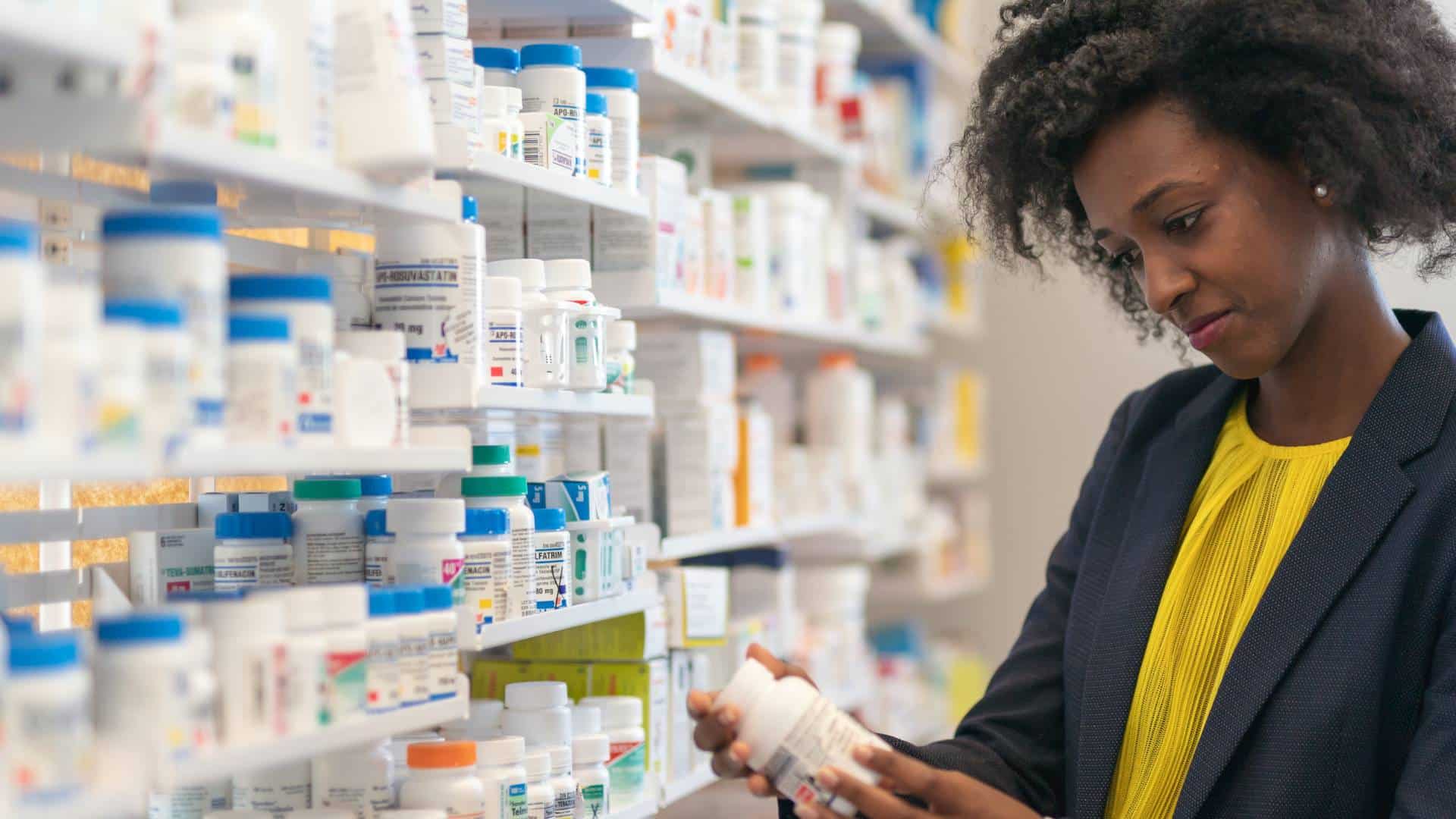
A woman considers buying a bottle of medicine off a store shelf. (Photo by FatCamera/ Getty Images Signature)
In 2020, my grandmother passed away just two months after doctors diagnosed her with a stomach ulcer. Our family was reassured that the illness was treatable and that patients could live with it without major complications.
One month later, however, she began to experience persistent pain. After medical examinations, doctors identified an infection of the pancreas. Four weeks after that diagnosis, she died.
As our family searched for explanations, my uncle blamed household neglect, while my mother spoke of mysticism.
According to medical sites, there can be many causes of a pancreatic infection. Still I can’t help thinking about the medicines she took and where they came from. For example, I remember being sent to the market to buy her ibuprofen and suppositories for stomach pain. They were displayed on tables under the sun, some stored in plastic bags.
When her pancreatic infection developed, pimples started appearing on her skin. She regularly applied a cream purchased from the market, but instead of healing, the pimples worsened and turned into open sores.
The consumers’ dilemma
Across Côte d’Ivoire, millions of people rely on informal and unregulated medicines every day, often without realizing the risks. Locally, we call these medicines “pharmacie par terre,” meaning pharmacy on the ground.
A 2022 study by two Norwegian researchers noted that Côte d’Ivoire hosts one of the largest informal medicine markets in West Africa, located in the commercial hub of Adjamé. According to the Order of Pharmacists, these unregulated and counterfeit medicines account for nearly 30% of drug sales in Côte d’Ivoire.
In a context where about 46% of the population lives with unstable or irregular income, access to formal healthcare becomes conditional on financial means. The high cost of consultation fees, diagnostic tests and pharmacy medicines creates a gap that informal markets quickly fill.
“Most people do not choose counterfeit medicines because they want to,” said Emelda Biermann, a professional nurse. “They turn to them because of poverty, limited access to healthcare and convenience. Many cannot afford consultations or pharmacy prices, while informal vendors offer cheaper drugs without prescriptions.”
Informal vendors sell medicines without requiring prescriptions, allow customers to buy flexible quantities and offer immediate access. They are easily accessible compared to the pharmacies that are rigid. Many areas in Côte d’Ivoire are lacking pharmacies, especially the rural areas.
A proliferation of fake drugs
Pharmacies that exist are often overcrowded, with long waiting times. Meanwhile, counterfeit medicines can be found across the country, as informal markets exist in almost every community. Additionally, the widespread circulation of cheap copies contributes to the normalization of these drugs and undermines the perception of their danger.
Consumers might be blamed, but what alternatives do people have when they cannot afford to visit a pharmacy every time they fall sick?
“You cannot always blame the people at the bottom,” Biermann said. “They are the consumers, but the question is: how did the product even enter the country? How did it enter the community?”
Governments bear a responsibility in the growth of the counterfeit market and increase in consumption, as they are in charge of regulating borders, approving pharmaceutical suppliers and pricing and enforcing manufacturing standards.
Weak monitoring, poor policing of supply chains and gaps in policy allow counterfeit medicines to cross borders and circulate freely. In some cases, she said, drugs are not only imported illegally but also produced locally, “in people’s backyards,” packaged and sold cheaply within communities.
Educating the public
Public awareness about the risks of counterfeit medicines is limited. “People take medicines without knowing what they are or what they do,” Biermann said.
Many consumers are unaware that these drugs may contain incorrect dosages, harmful substances or no active ingredients at all. The immediate relief they sometimes provide reinforces trust, masking long-term health risks that are less visible and harder to attribute.
“Most of the time, they come to us when the damage has already been done,” Biermann said. “We are no longer treating the counterfeit medicine itself, but the medical complications.”
She describes cases where frequent use of unregulated anti-inflammatory drugs can lead to gastric ulcers, internal bleeding or heart-related problems.
For Biermann, health education is one of the most powerful tools to reduce this crisis. She points out that patients are often told what a medicine does, but not what it is, how it works or what side effects to watch for. Effective public awareness must use simple, accessible language and be delivered in places where people seek care, such as clinics and hospitals and in informal markets where people consume and sell these drugs.
“Vessels of information”
Biermann insists that people who cannot afford private pharmacies should be encouraged to go to public clinics and government hospitals, where medicines are legally sourced and provided at low or no cost.
However, she stressed that accessibility is not only about price: patients must also be treated with dignity, respect and confidentiality so they do not feel afraid or ashamed to seek help.
Finally, she highlighted the critical role of healthcare professionals. Nurses, doctors and trained community health workers can act as “vessels of information,” spreading accurate knowledge about medicines, warning against counterfeit drugs and guiding patients toward safe treatment options. Without this human connection, she warns, counterfeit medicines will continue to fill the spaces left by weak systems.
The government of Côte d’Ivoire has attempted to address the issue by trying to close informal markets using violence. According to the Ivorian Press Agency, in 2023 alone, the narcotics and drugs police seized 12 tons of illicit drugs and counterfeit medicines in the Haut-Sassandra and Worodougou regions.
Under the Ministry of Health, the Directorate of Pharmacy, Medicines and Laboratories regulates the importation and authorization of pharmaceutical products. All medicines sold legally in Côte d’Ivoire must obtain marketing authorization, a process established by the Ivoirian government.
In 2017, the government introduced a universal health insurance scheme (Couverture Maladie Universelle, or CMU). Designed to provide free or low-cost healthcare to workers and students, the CMU is presented as a structural response to health inequality. In order to reach its goal to cover the entire population and stop the phenomenon of “pharmacy on the ground,” the government made the CMU enrolment compulsory for accessing public services.
However, despite these reforms, the problem persists. Many regions remain unreached, access to insurance is uneven and difficult, poverty continues to rise and long-held beliefs about informal medicines remain deeply rooted.
While responsibility for the circulation of counterfeit medicines may be debated between consumers, sellers and authorities, there is one urgent question: How can the world guarantee that everyone has access to the medicines they need that are safe and effective?
Questions to consider:
1. Looking at your environment, what do you think is the main reason people turn to counterfeit medicines?
2. Why do you think that some measures taken to combat counterfeit medicines have not worked?
3. Can you think of a fair and effective solution to the problem of counterfeit medicines?

Haude Estefania Yapi is an Ivorian student at African Leadership Academy with a strong interest in economics, international relations and social entrepreneurship. Dedicated to servant leadership, she aspires to empower vulnerable communities through education and action-driven initiatives, turning challenges into opportunities and creating meaningful, lasting impact.